Exterior perimeter barriers focus specifically on stopping migrating pests during Austin's extreme temperature shifts and flash flood events. In karst-adjacent limestone areas like Circle C Ranch and Zilker, high…
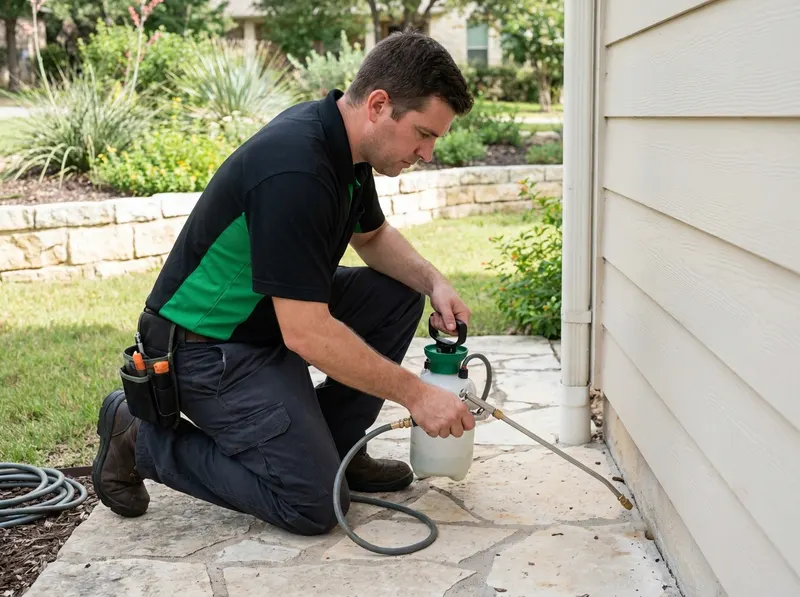
Exterior perimeter barriers focus specifically on stopping migrating pests during Austin's extreme temperature shifts and flash flood events. In karst-adjacent limestone areas like Circle C Ranch and Zilker, high summer temperatures exceeding 100 degrees Fahrenheit drive the striped bark scorpion (Centruruoides vittatus) out of dry cedar breaks and rock piles toward home moisture. Applying a microencapsulated, non-repellent compound to three feet of vertical masonry foundation wall and six feet of surrounding soil stops scorpion mobility before arachnids access expansion joints. By anchoring pest eradication along the building perimeter, internal chemical usage is eliminated, safeguarding children and domestic animals from aerosol exposure. This methodology follows the EPA Integrated Pest Management standards to limit interior synthetic inputs while resolving insect pressures outdoors.
Older established central neighborhoods such as Hyde Park, Bouldin Creek, and Tarrytown contend with canopy-driven migrations of smokybrown and American cockroaches (Periplaneta americana). Mature pecan and live oak trees allow roaches to drop onto shingle roofs, descending downward into exterior weep lines and siding gaps. RiverMint Pest Solutions addresses these access paths by de-webbing soffits, treating brick fascia, and placing physical copper mesh or breathable barrier seals over foundation weep gaps pursuant to Texas A&M AgriLife Extension perimeter pest recommendations. Modern master-planned subdivisions like Mueller and Avery Ranch present distinct architectural conditions, where zero-lot lines, high-density residential footings, and decorative limestone xeriscaping create subterranean thermal pockets for invasive tawny crazy ants (Nylanderia fulva) and Argentine ants (Linepithema humile). Perimeter applications in these communities target expansion cracks in concrete patios and decomposed granite mulch beds, avoiding indiscriminate blanket hosing that degrades beneficial native turfgrass fungi.
Homeowners selecting targeted perimeter defense choose an outdoor containment strategy over invasive indoor pesticide applications. If an infestation is already reproducing inside kitchen drywall voids, an interior targeted injection is required first; if pests are purely seasonal intruders foraging from outdoor shrubs or alleyways, an exterior perimeter defense is the proper barrier fit. The logistical trade-off centers on environmental durability: organic mulch, crushed granite, and heavy clay soil around East Cesar Chavez river corridors require specific non-ionic surfactants so microencapsulated formulas bind to wet silt during sudden seasonal rainstorms without washing into Lady Bird Lake. RiverMint Pest Solutions adheres to the structural treatment mandates defined by the Texas Department of Agriculture Structural Pest Control Service, applying family-safe, botanical-leaning active ingredients rated strictly for environmental runoff compliance.
Every job gets a firm, written price after a free on-site visit.
For standards, safe disposal, and service guidance on pest control services in Austin, TX, useful references include U.S. EPA, ENERGY STAR, U.S. Dept. of Energy, Consumer.gov, U.S. Census Bureau, and Google Maps. General consumer and small-business resources are available from USA.gov, Better Business Bureau, FTC Consumer Advice, U.S. Small Business Administration, and Ready.gov.
Tell us about your targeted perimeter pest defense job in Austin and we'll send a clear, written quote, usually the same day.
 RiverMint Pest Solutions